
Meet our Students
Curious about what life as a grad student in our group is like? Here are some interviews with students: Kayla, Kenny, Autumn, Lorraine, and Nick.
An Interview with Kayla Schang
What year are you and where did you go to undergraduate?
I’m a fifth-year student. For undergrad, I completed a Physics major with Astronomy emphasis and music and math minors and graduated with a B.A. in Physics in Spring 2021.
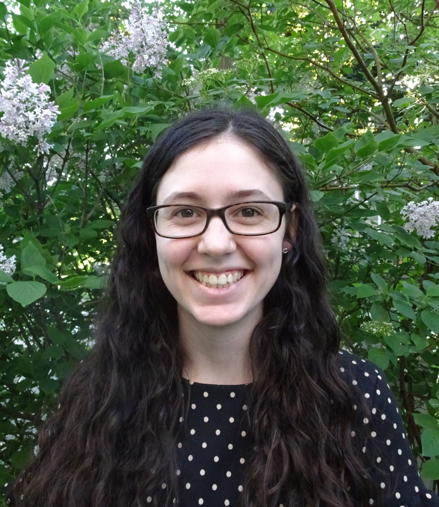
Describe your line of work in planetary science in non-technical terms.
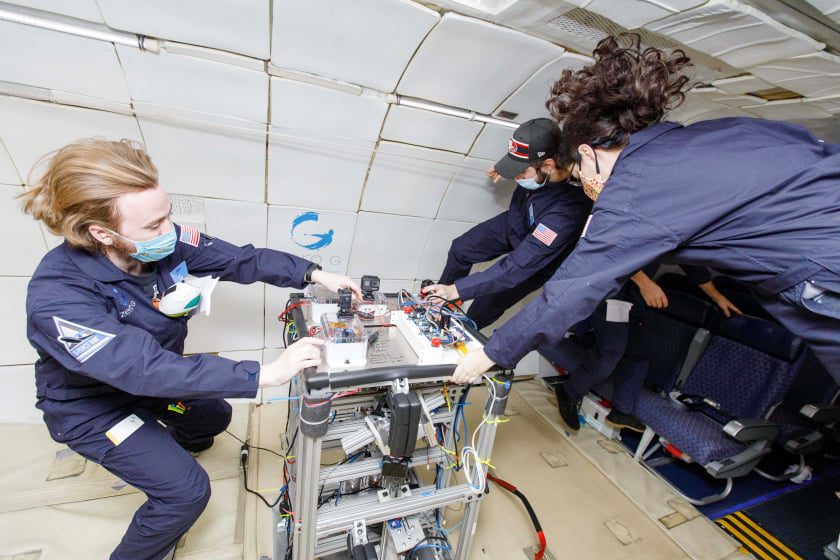
I currently study regolith and dust in the solar system, especially the properties of lunar regolith. Regolith is the layer of unconsolidated rock and soil material on a planet, moon, or asteroid. I like to describe it as space dirt, except we can’t call it dirt because that might imply biological material. I currently work on the Strata projects with my advisor, Dr. Addie Dove, to study regolith. Strata 1 is where tubes of regolith and regolith-like materials flew on the ISS — my job is to use code to process the video data from that experiment. Strata 2P is where similar tubes of regolith-like material flew on a parabolic flight (a.k.a. the flights where people get to experience less gravity and go floating in the air!) For Strata 2P, I helped with the experiment setup and actually flew on the parabolic flight in December 2021.
What made you decide on UCF for grad school?
When thinking back about what I liked most from my previous classwork and internships when I was an undergrad, I realized that I was most excited about astronomy which focuses on the solar system. It is still really neat to be able to see far away objects through a telescope but being able to study objects that humans or human-created technology have visited just seemed particularly exciting! Since we are limited by the laws of physics, this mostly only applies to solar system objects. This led me to look for graduate programs that offered a specific planetary science program, and ideally ones that had some connections to missions. Since planetary science is a broad field, it was also helpful to find a physics-based graduate program like the one at UCF to match what I had learned while doing the physics major.
Talk about your best experience so far.
By far my best experience was being invited to fly on the Strata 2P parabolic flight with Zero-G in December. While completing flight projects is always stressful, it was a great way to get to know other people connected to the project, and of course, the flight itself is unforgettable!
What about Orlando itself — what’s best about living here?
Coming from Wisconsin, and doing undergrad in the equally-cold Minnesota, I was very apprehensive about living someplace that is so warm and humid for so much of the year. But, I do have to admit there are benefits, and it is certainly nice to not have to bundle up every time you go outside (especially if you have a dog to walk!) and definitely a bonus to be able to go to the beach virtually year-round.
How about life as a grad student — what adjustments have you had to make?
I feel like I actually went the opposite way as most students. In undergrad, I was definitely over-committed and over-stressed in a way that I quickly learned was not going to be sustainable for another 4-6 years in grad school. But, while I got the hang of not over-committing pretty quickly here, it has been much harder to re-evaluate how I work best to make sure I am still productive even though my days aren’t as packed as they used to be.
What are you plans for after graduate school?
I am definitely most interested in finding a way to be involved with the science side of missions, whether that means working directly at NASA or working at many of the other research companies that become involved in missions.
Do you have some insight about what it takes to succeed in grad school?
While I think it is always good to take a step back and review your time management techniques, study tools, and the classic things listed in school advice articles, find a way to make sure you aren’t losing the big picture of what you are trying to work on along the way. For example, it is great to read a wide variety of articles when you start off learning about a new topic, but how will you make sure you are connecting it back to your research or even just retaining the knowledge in a long-term way? Making sure you have an organizational system that can be your ‘second brain’ will be even more important in grad school, where everything needs to eventually tie into your thesis, than in undergrad where classes were the focus.
Is there some advice you can pass on specifically to new graduate students?
First, try to find students in your classes who you can do work with, or at the very least make some group chats! It can be intimidating to work with others, but finding a good match for a study-buddy means you both can practice ‘teaching’ the material to the other, you learn new ways of problem-solving that you may not have discovered on your own, and generally come out with a better understanding of the concepts aside from just being able to complete the homework questions. Setting this foundation now will also make it more natural to ask for help with future research questions when it comes time!
An Interview with Jon Keathley
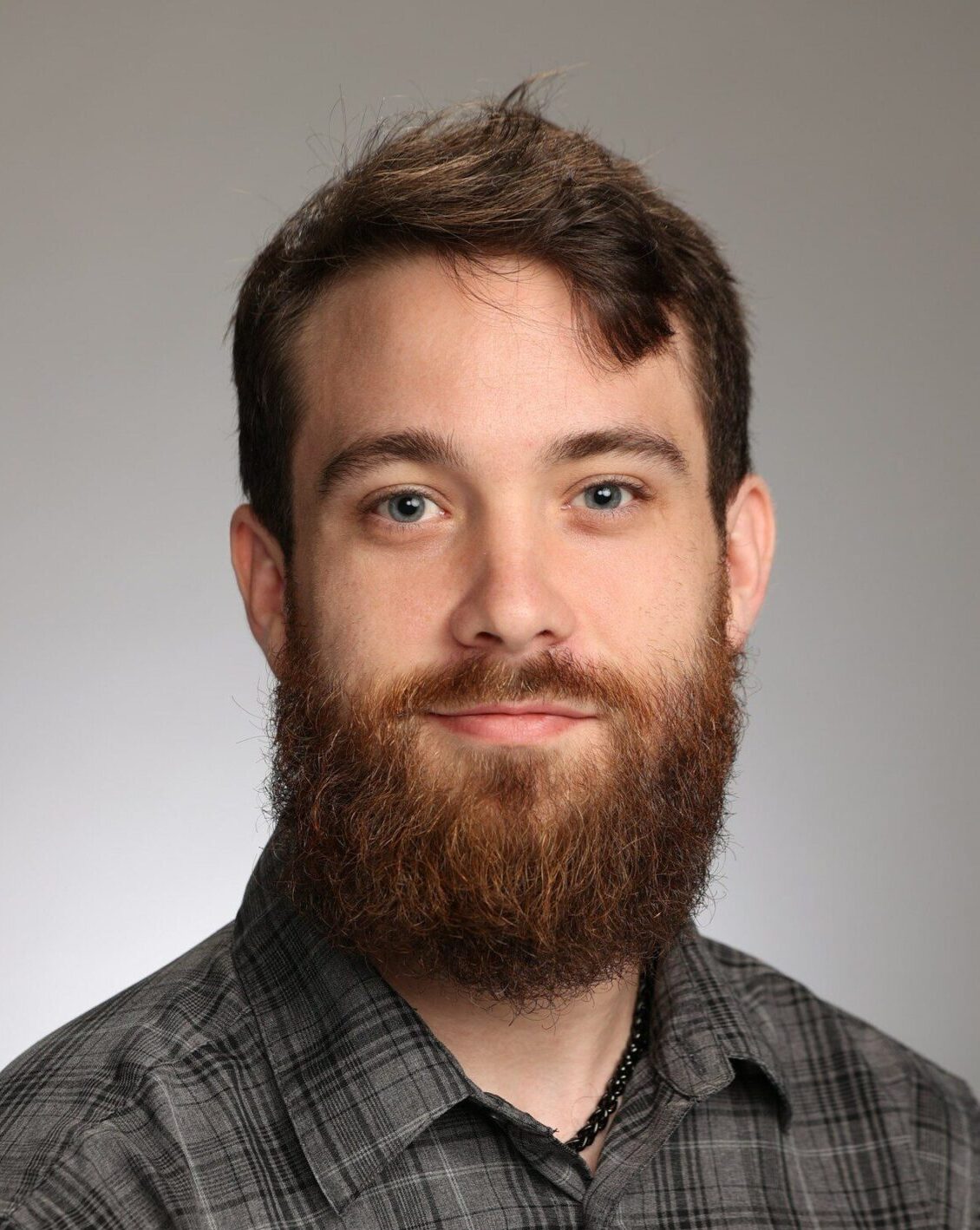
What year are you and where did you go to undergraduate?
In August 2025, I will be beginning my third year as a Physics Ph.D. student on the Planetary Sciences Track. I graduated with my B.S. in Physics with a concentration in astrophysics in May 2023 from the University of North Florida.
Describe your line of work in planetary science in non-technical terms.
I primarily focus on theoretical modeling of the atmospheres of terrestrial planets and exoplanets. My work is centered on understanding the habitability of these worlds during their early stages after formation. I simulate the extreme, early atmospheres of these planets to better understand how they transition from hot magma ocean worlds with no liquid surface water to habitable planets with large bodies of liquid water, similar to Earth today. We know very little about how our own planet developed shortly after its formation, but with the advancement of experimental results, the data now allows us to model, albeit in a simplified way, what could have taken place on these young worlds and start tracing the evolution of water from the very beginning.
What made you decide on UCF for grad school?
I applied to grad schools all over the country because, having been born and raised in Florida, I wanted to see what it would be like to study in a different part of the country. However, from the very beginning, my advisor at UCF was so attentive and welcoming that I was immediately drawn to the program. During my visit, the students were just as friendly and supportive. When I researched grad schools online, I kept coming across stories and videos that made it seem like grad school was a competitive battlefield with unreasonable workloads, professors who cared only about your output, and a survival of the fittest mentality. Luckily, UCF turned out to be the complete opposite. Everyone here genuinely wants each other to succeed, and any assistance they can offer makes achieving your goals that much easier. The professors also truly respect your physical and mental well-being. After that visit, I knew I wanted to be part of this department.
Talk about your best experience so far.
My best experience so far has to be traveling to Japan for the Japan Geophysical Union, where I gave my first public talk on my research. I had never left the country before, so getting the chance to visit one of my bucket-list destinations through my work as a graduate student was an incredible feeling. Meeting and interacting with scientists who might one day become collaborators was inspiring. Sharing my research with a group of like-minded experts who see the value in my work is a feeling like no other. And, of course, exploring Japan itself was amazing.
What about Orlando itself — what’s best about living here?
The best thing about living in Orlando is the diversity. There’s something for everyone, whether it’s food, entertainment, exercise, or wellness. The options feel endless.
How about life as a grad student — what adjustments have you had to make?
The biggest adjustment I had to make was budgeting. I had lived alone for several years before grad school, and I wanted to continue doing that, which is possible but takes effort to stay financially stable. Orlando’s diversity also means the cost of living is higher than in many other places. I think the best option for most grad students is finding a group to room with, but living on your own is definitely doable with the right discipline.
What are your plans for after graduate school?
I hope to get a post-doc position where I can continue researching planetary habitability. I’m open to many types of habitability research, not just atmospheric modeling. As long as I can work on understanding the possibility of life elsewhere in the universe, I’ll be happy. Ultimately, I want to secure a tenure-track position at a college, where I can both teach and continue my research. Teaching and mentoring students has always been a passion of mine, so being a tenure-track professor would allow me to keep learning while inspiring the next generation.
Do you have some insight about what it takes to succeed in grad school?
The biggest piece of advice I can give is to treat grad school like a full-time job. It’s unique in that it doesn’t have set hours, and tasks can pile up without much intervention from advisors until it becomes overwhelming. Staying on top of your work with a schedule is crucial. It doesn’t have to be a traditional 9-to-5, but having some structure will keep you grounded, especially in the first couple of years when you’re adjusting to so many new things. There are many ways to succeed in grad school, but this strategy has been the backbone of my success so far.
Is there some advice you can pass on specifically to new graduate students?
Don’t be afraid to reach out to professors whose research interests you, even if you don’t have direct experience in that field. Grad school is where you gain the experience you need. Prior experience can give you a head start, but it’s not required to succeed. I can speak from personal experience: I had no prior background in atmospheric science or modeling before coming to UCF, I had studied supernova remnants. But I was passionate about astrobiology and eager to learn, and that was enough for my advisor to take me on. Your undergrad experience teaches you the fundamentals of research and how to publish, but it doesn’t limit the scope of what you can explore in grad school.
An Interview with Myrla Phillippe
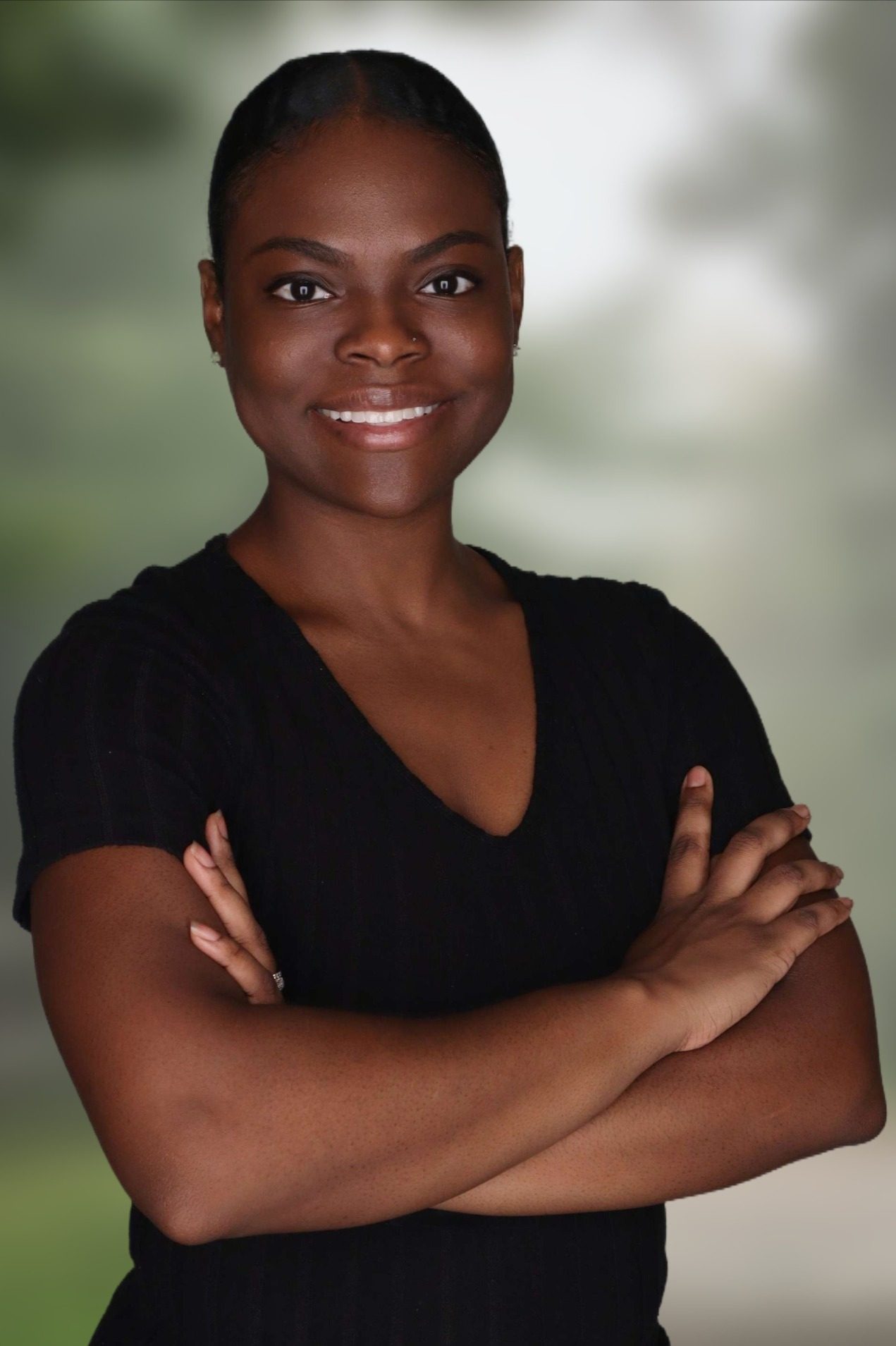
What year are you and where did you go to undergraduate?
I’m a third-year Planetary Science graduate student at the University of Central Florida, where I also earned my undergraduate degree in Physics.
Describe your line of work in planetary science in non-technical terms.
I study the atmospheres of brown dwarfs and exoplanets by creating computer models that simulate how their clouds—or the absence of clouds—might appear. These models also predict how the objects would look when observed through different telescopes and instruments. My current focus is on brown dwarfs—objects that are relatively easy to image compared to most exoplanets because of their size and ability to emit their own infrared light.
A key part of my work is modeling where in the atmosphere the light we detect originates. This allows us to connect what we see in the data to the physical processes occurring on these distant worlds. By understanding their atmospheric and cloud behavior, we can apply that knowledge to more challenging targets, including potentially Earth-like planets in the future.
The models also guide observational strategies—helping us determine what to look for and how best to look for it. As new telescope observations become available, we refine our models, and in turn, those updated models inform the design and goals of next-generation planet-hunting telescopes currently in development.
What made you decide on UCF for grad school?
After earning my first bachelor’s degree in Health Science from the University of South Florida, I decided to pursue my passion for Planetary Science and Astronomy. I began by taking physics courses and listening to the Walk About the Galaxy podcast, hosted by UCF faculty. I loved the way they made complex topics engaging and fun, and I wanted to be part of that environment. Once I began research with my now-advisor, I knew UCF was the right place to continue into graduate school.
Talk about your best experience so far.
One of the highlights of my journey has been the incredible sense of community. Both professors and peers are not only deeply knowledgeable but also genuinely supportive, fostering a collaborative and uplifting environment.
Presenting my research abroad alongside my team was an unforgettable milestone. I had the privilege of meeting many esteemed scientists—authors of some of the most fascinating work in exoplanet research. One particularly memorable moment was discussing my work right in front of my poster with some of the field’s leading names. The nerves I felt were intense, but the experience was truly exhilarating and unforgettable.
What about Orlando itself — what’s best about living here?
Orlando is vibrant and full of opportunities to explore. As a foodie, I especially appreciate the diverse cuisine—Ethiopian, Haitian, Indian, and Korean are some of my favorites.
How about life as a grad student — what adjustments have you had to make?
Balancing research, coursework, and life requires careful planning. Passion for research can consume all your time if you let it, so I’ve learned to stay adaptable, take advice from mentors, and fine-tune my schedule regularly.
What are you plans for after graduate school?
I hope to teach, conduct research, or pursue new opportunities as they arise. I’m excited for the possibilities ahead.
Do you have some insight about what it takes to succeed in grad school?
Discipline and adaptability are key. Embrace both successes and setbacks—they’re part of the same journey. Challenges offer new approaches, and success simply leads to the next step. The process is always evolving.
Is there some advice you can pass on specifically to new graduate students?
Engage with your peers and faculty. It’s tempting to stay at your desk all day, but collaboration often leads to faster problem-solving and better ideas. Don’t isolate yourself—share, connect, and grow with your community.
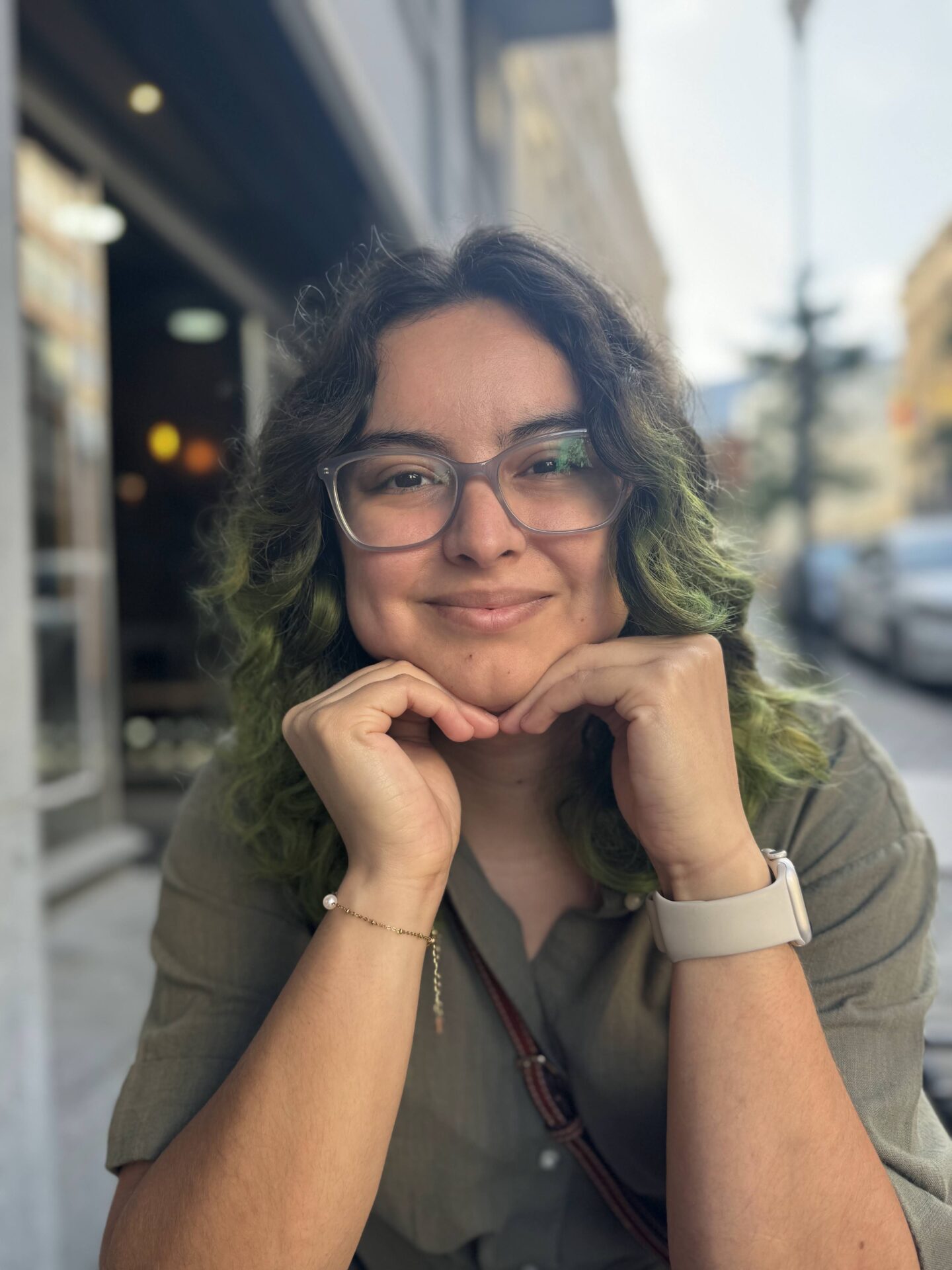
An Interview with Lorraine Rosello Del Valle
What year are you and where did you go to undergraduate?
I am currently a 4th year graduate student. I went to the University of Alabama in Huntsville. While there, I completed a B.S. in Physics and Mathematics in Spring of 2020 and then went on to get an M.S. in Physics. My master’s thesis was dealing with modeling multilayer spheres using Mie theory with an interest in viruses and nanoantenna. I had a bit of a career change when I started my PhD.
Describe your line of work in planetary science in non-technical terms.
I currently look at a class of meteorites called Carbonaceous Chondrite meteorites (CCs). These meteorites contain complex organics and are theorized to be one of the possible sources of water and organics for the Earth. They have been linked to recently visited asteroids Ryugu and Bennu. I use scattered (Raman spectroscopy) and reflected (reflectance spectroscopy) light from these meteorites to determine their composition. Based on their composition, we can better understand these bodies. However, the space environment also alters these bodies with processes known as space weathering (solar wind, micrometeorite bombardment, etc.). So to better understand the composition of these bodies, I simulate space weathering processes in the lab and examine how their scattered and reflected light are changing.
What made you decide on UCF for grad school?
The biggest deciding factors for me were my advisor and the research I would be doing. Graduate school is difficult, and it is made even more difficult if you don’t enjoy what you are doing. I started my master’s during the COVID-19 pandemic, so there weren’t many (if any) opportunities to do lab work. So my master’s thesis had to be modeling based. While modeling was interesting, I realized that I much preferred working in the lab. I was able to get in the lab the second year of my master’s and knew I definitely wanted to do some amount of lab work. From there, I started reaching out to people. I met my current advisor, Dr. Kerri Donaldson Hanna, as well as others in the department. I felt that the research was interesting and exciting. In my decision, the research and the people in the department were what drew me into UCF. The notoriety and proximity to Kennedy space center, the Florida Space Institute, and other such organizations was the icing on the cake.
Talk about your best experience so far.
My best experience so far has been getting to travel to Lille, France to conduct microRaman spectroscopy measurements. I was able to improve the signal-to-noise ratio and get twice as much data as we hoped. I am in the process of going through the data now and it’s so exciting to try and piece together the histories of these meteorites. It was also really cool to be a visiting scientist at a university. I felt like a real scientist taking the lead on the measurements. Also, it was very cool to see France!
What about Orlando itself — what’s best about living here?
Honestly, the fact that there as so many things to do and places to eat. There’s always an event happening any given weekend. I have been loving going to see musicals at local theatres. Also, the UCF theatre department is phenomenal. Recently, they put on Sweeney Todd and I was absolutely blown away by the performances. The Dr. Phillips Center Broadway seasons have also been really good. In terms of food, the variety of different cuisines is astounding. My partner and I have an ever-growing list of restaurants recommendations to try in Orlando and it’s growing so fast we’ve barely made a dent in it. Some of my favorites have been UniGirl on Mills Rd and Pho54 in Oviedo.
How about life as a grad student — what adjustments have you had to make?
As a PhD student, you are in charge of your own research experience. Of course, your advisor is there to help you and guide you. However, the goal is to turn you into an independent researcher. When you first start the program, you are learning, and you rely on your advisor a lot. As you progress in your degree, you slowly become more independent and are given more responsibility and decision-making power, which can be scary. The biggest adjustment has been trusting my own abilities and knowledge to make big research decisions. Another adjustment has been learning to deal with uncertainty. Lab work is tricky as a million things could go wrong; equipment can break, facilities can become unavailable, etc. There is a lot of uncertainty at times. However, you can always pivot and get exciting science in the unexpected.
What are you plans for after graduate school?
I am currently planning on pursuing a post doctoral position at an institution such as the Natural History Museum or university. I am planning on continuing in sample science, looking at carbonaceous chondrite meteorites and expanding from there.
Do you have some insight about what it takes to succeed in grad school?
Getting through graduate school takes being willing to fail and having a community. You can’t know everything, you are not a robot. You will make mistakes; that’s what learning is. Your advisor is there to help you through this process and help you try better. Also, the graduate students and faculty in this department all want you to succeed. Reach out for help when you need it and help others in return. This creates a great collaborative environment that is necessary in planetary science. Planetary Science is a very interdisciplinary field and so building a community is vital in succeeding.
Is there some advice you can pass on specifically to new graduate students?
I know reaching out is terrifying (trust me, I have been in your shoes), but talk to people! I have had collaborations arise from a simple conversation! It’s hard to keep track of every new paper that comes out, so talking to people also exposes you to research you may not be aware of. Treat your colleagues as potential collaborators and not competition. Also, cold emailing people is scary but necessary! Trust me when I say, most people in planetary science are delighted to receive your email! Even if they don’t have funding for you, they likely will know someone that does! Put yourself out there!
An Interview with Nick Piskurich
What year are you and where did you go to undergraduate?
I am just about to start my third year in the program in the Fall of 2022. I received a B.S. in Environmental Engineering from the University of Notre Dame in 2019. Go Irish!
Describe your line of work in planetary science in non-technical terms.
I am a planetary geologist, and I try to understand the materials (rocks, minerals) that make up the surfaces of planets / airless bodies and determine the large-scale geologic processes that formed these deposits that we see on planets’ surfaces. In particular, I use spectroscopic datasets, which tell us information about how light interacts with the surfaces of planetary bodies. The way that light is absorbed, scattered, or emitted is related to the mineralogy of the surface. My current candidacy project involves studying strange features on the Moon known as irregular mare patches, which could be the result of volcanic processes very late in lunar history. To understand their compositions, I use datasets from several spacecraft that have orbited the Moon in the past decade or more. A typical day for me involves using image analysis, mapping, and coding software that helps me to select regions nearby these patches to better understand their compositions. Determining the materials that make up the Moon’s surface and the processes that formed these surfaces is important for understanding the evolution of the Earth-Moon system and our solar system. Earth’s nearest neighbor holds a lot of valuable information: all you have to do is take a closer look!
What made you decide on UCF for grad school?
Deciding on grad schools was a bit challenging for me, but ultimately, I came to UCF because of my shared research interests with my advisor, Dr. Donaldson Hanna, as well as the proximity of UCF to some of my family. Orlando is also home to many hidden gems in terms of food and attractions. I have been here for almost two years now and am still discovering new places for outdoor activities and yummy bites.
Talk about your best experience so far.
This past July, I had the opportunity to attend the NASA Exploration Science Forum and Lunar Graduate Conference in Boulder, Colorado. This was my first in-person conference ever, and after several years of pandemic and Zoom burnout, it was awesome to meet collaborators, peers, and mentors who gave me valuable feedback on my project. It was also a great opportunity to hear about the diverse research topics in planetary geology and science as well as get exposure to some of the upcoming NASA missions relevant to my own research interests. Finally, I made friends with graduate students from other institutions, and we had the chance to explore CU Boulder’s campus, nearby eateries, and attractions, which turned out to be one of my favorite experiences of the whole summer!
What about Orlando itself — what’s best about living here?
Surprisingly, it has to be the food. I was not anticipating how many amazing and innovative restaurants and bakeries there are in the general Orlando area. Some of the best places I have found along the way include Chi-Kin, which dishes out some delicious Korean fried chicken and waffle fries, and Gideon’s bakehouse, which sells behemoth half-pound cookies that will keep you coming back for more. I am also a huge Star Wars and Harry Potter fan, and there are more than enough attractions at Disney to keep you entertained with lightsabers, wands, and everything in between.
How about life as a grad student — what adjustments have you had to make?
While undergraduate life was certainly full of many challenges, grad school forces you to become comfortable with failure, even if it is from day-to-day tasks or something more long-term. When collecting and analyzing data or learning a new technique, you are constantly learning things on the fly, and you have to learn to show yourself grace and be prepared to make mistakes, sometimes repeating the same ones over and over again. I have tried my best to learn and apply patience and perseverance to my everyday research tasks, and grad school is about continuing to adapt to these constantly changing situations. The other thing is time management and holding yourself accountable for reaching short-term and long-term project goals. Undergrad classes were filled with deadlines for everything, but grad school involves more self-imposed deadlines and goals to meet.
What are you plans for after graduate school?
I would like to work at a NASA center and get involved in mission planning / architecture by using the scientific background from my grad school projects. Several classes here at UCF have exposed me to the planning missions and drafting mission proposals, and to me, that would be an exciting challenge and fulfilling endeavor to be a part of the next-generation scientists looking to explore the Moon and beyond!
Do you have some insight about what it takes to succeed in grad school?
I think sometimes you have to be honest with yourself about your knowledge and work limitations. It is okay to admit to yourself, your advisor, class professor, or colleagues that you are wrong about something or that you may need help with something. While your degree will only have one name on it, it is the result of a lot of help and guidance from others and your willingness to go to others for insight. So don’t be afraid to go to others for assistance, because it will likely end up paying huge dividends in the classroom or for your research project. Also, you should be honest with yourself about how many hours you can put in each day and set firm limits on work hours vs. free time hours. Your brain will thank you!
Is there some advice you can pass on specifically to new graduate students?
The biggest thing is probably to do your best not to fall victim to imposter syndrome. It is the most pervasive characteristic of people in academia. Whenever you compare yourself to others’ progress, it is usually to your own detriment. Focusing on your own goals and progress will help to improve your mental health and outlook. Another thing I would say is that you should find a work schedule that optimizes your output. Grad school is filled with a lot of unstructured free time, so try to find the best work hours and make a routine out of it while keeping in mind that you should set aside free time that you want.